


Nov. 1947: The United Nations General Assembly approves elections to be held throughout Korea to choose a provisional government for the entire county. The Soviet Union opposes this.
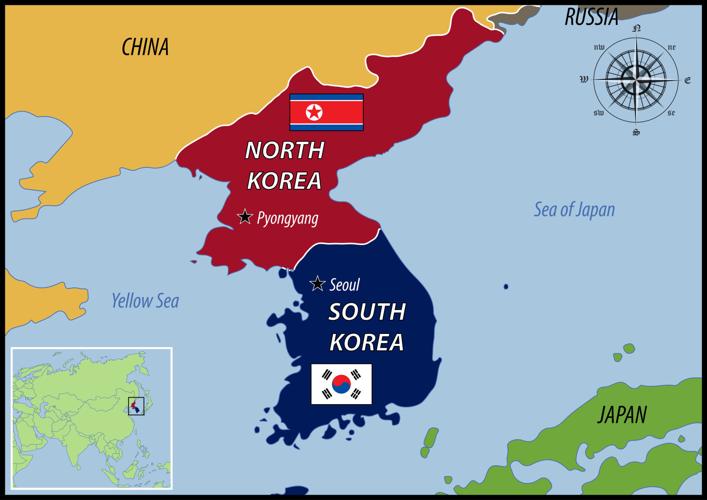
May 10, 1948: The people of South Korea elect a national assembly, setting up the government of the Republic of Korea. The north refuses to take part.
Sept. 9, 1948: North Korean Communists establish the Democratic People's Republic of Korea.
June 25, 1950: 135,000 soldiers from the communist North Korean People's Army (NKPA) cross the 38th parallel and invade Republic of Korea (ROK). The U.N. Security Council denounces North Korea's actions and calls for a cessation of hostilities and withdrawal of the NKPA to the 38th parallel.
June 26, 1950: U.S. President Harry S. Truman directs Gen. Douglas MacArthur to evacuate American dependents from Korea and to assist the ROK Army.
People are also reading…
June 30, 1950: Truman orders ground troops into action.
July 1950: In the first month of the war, U.S. soldiers kill significant numbers of Korean civilians under a bridge, near a village called No Gun Ri. It is unclear whether the soldiers were ordered to kill civilians or acted on their own.
July 5, 1950: For the first time since the end of World War II, U.S. troops go into battle, at Osan, 30 miles south of Seoul. The first American casualty of the Korean War dies here, Pvt. Kenneth Shadrick of West Virginia.
June 23, 1951: Jacob Malik, a Soviet delegate to the United Nations, proposes a cease-fire.
July 10, 1951: Truce talks begin at Kaesong.
Oct. 25, 1951: Truce talks are moved to Panmunjom.
Nov. 27, 1951: Both sides agree the existing battle lines would be the final dividing line between North and South Korea if a truce is reached in 30 days.
April 1952: Truce talks are deadlocked over voluntary repatriation.
Oct. 8, 1952: Truce talks are adjourned.
April 26, 1953: Truce talks are resumed, and the Communists agree to voluntary repatriation.
July 27, 1953: Democratic People's Republic of Korea (north), Chinese People's Volunteers and the U.N. sign an armistice agreement. The Republic of Korea refuses to sign. However, hostilities cease within 12 hours. Terms of the armistice include creation of the demilitarized zone, the DMZ. Each side is 2,200 yards from a center point. The DMZ is patrolled by both sides at all times.
1990-1994: North Korea recovers the remains it claims to belong to 208 American servicemen.
2007-present: The Defense POW/MIA Accounting Agency posts news releases online about recently accounted for service members' remains.
Sources: Department of Defense, Encyclopedia Britannica


