



While it’s tough for some Cedar Valley retail stores to nail down exactly how much they’ve been impacted by the Great Resignation, it’s safe to say many operators have embraced the reality and come up with answers for how to avoid a workforce shortage.
The Great Resignation is a term coined to describe the unprecedented number of people who have reportedly quit their jobs during the COVID-19 pandemic to re-evaluate their lives and careers.
The Kwik Star convenience store chain has felt the impact, said spokesperson Steve Wrobel, but he noted the company’s culture has been its backbone, responsible for the chain’s continued growth.
“When potential workers have so many more job opportunities than in the past, they are looking for something that lends them a purpose,” he said. “There’s more to the job than pay, and at the end of the day, you want to believe what you do matters.”
People are also reading…
That purpose is found by those who enjoy interacting with people, he said. Examples include above-and-beyond work, such as helping a customer who has run out of gas or has a flat tire, or carrying out a customer’s groceries.
Wrobel said most if not all of Kwik Star’s competitors are offering sign-on bonuses and higher pay. “Everyone is doing it, so the amount of new workers we’ve attracted has leveled off some.”
There are 15 Kwik Star stores in the Cedar Valley, each employing 20-25 workers. The chain will open 40 to 50 new stores this year, nine in Iowa.
Kwik Star also has leveraged its opportunities for advancement in its hiring strategy. In addition, stores are open 24/7, so it can accommodate most work schedules, Wrobel said.
Another large employer, Hy-Vee supermarkets, has not been impacted by the Great Resignation, according to Dawn Buzynski, director of strategic communications. The chain has 1,500 employees across its Waterloo, Cedar Falls and Waverly stores.
Hy-Vee’s Iowa stores have seen a of 14% increase in workforce in the past year.
While conceding the “current labor market is challenging,” Buzynski said Hy-Vee has innovated when it comes to attracting talent.
“While we offer a very competitive compensation package across our eight states as well as opportunities for career growth, we understand that flexibility is just as important as compensation,” she said.
Last year, Hy-Vee introduced its “flex workforce,” which gives workers greater flexibility in choosing shifts and balancing their home and work lives.
“Establishment of the flex workforce is a result of the surge in online shopping when the pandemic began,” she said. “Predominately flex workers work in our Aisles Online departments fulfilling online orders, however they can work in other areas of the store. The flex worker is able to choose the days/hours they want to work during a given week, and isn’t tied to a set schedule. Flex workers operate in a market and not a specific store, so it offers the worker the ability to select shifts from multiple stores as needed.”
In its mission to be “the best place to work in America,” Hy-Vee evaluated its benefits and rolled out employee discount programs, appreciation bonuses, employer-sponsored insurance for both full- and part-time employees, as well as tuition and child care assistance.
The scramble to attract and retain workers affects small businesses as well.
Yore Uniform Shop in Waterloo has about five employees. A recent opening attracted fewer applicants than usual and took longer than usual to fill.
With only two openings in two years, Yore takes pride in its ability to retain employees.
“It’s a very small, tight-knit business, and if you work here, you come across a lot more of the fun parts of working in retail because we’re more easy-going and laid back,” said Kristina Lambert, store manager.
At the same time, there are tight financial margins that constrain her ability to offer incentives.
“It’s a lot of small stuff that adds up for our employees, and doesn’t sink us,” she said.
In May, she plans to offer employees $0.50 more per hour if the store sees a 5% percent growth in sales. That additional income bump will be higher if the store exceeds expectations and reaches, say 10% or 15%.
Six months ago, she began offering bonuses for employees who completed training videos that increase their knowledge of a product — for example, one geared toward the medical field.
“They work really hard, and we want to give back what we can. We can only do so much. But we do care about them, and want give them a big thank you,” she said.
Real Deals is a franchise with a locally owned home decor and fashion boutique in Cedar Falls that also has four or five employees. According to owner Heather Allan, it hasn’t seen a lot of recent turnover.
Having opened two and half years ago, a lot of the staff tends to be college students, who come and go because of graduation and changes in class schedule. Her location in Cedar Falls has helped the store remain fully staffed.
Allan says there are the “perks for working here,” like team lunches and the occasional gift cards to “thank workers for instance if we have a crazy fourth quarter.”
“We try to keep an upbeat atmosphere and offer rewards for hard work,” she said.
She takes pride in the quality of her employees. If on the fence about working at Real Deals, she said, “Maybe they are not the best candidate. We like to have people who are enthusiastic, upbeat, and ready to take on the fast pace of the job.”
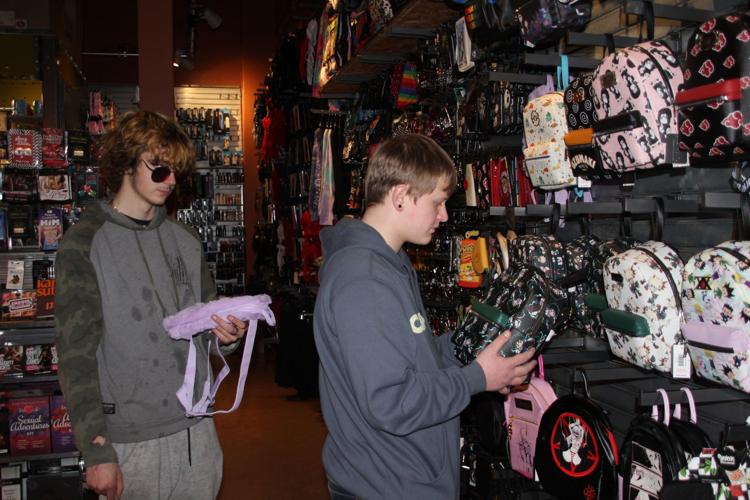
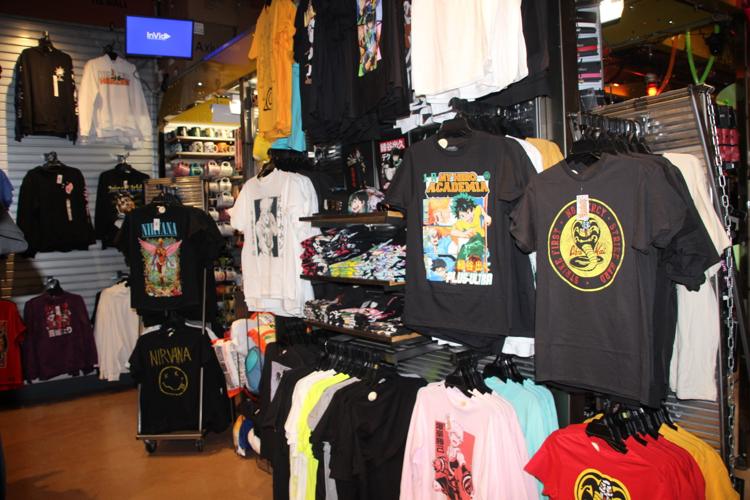
Spencer’s, a retail chain store offering novelty items and apparel in Cedar Falls, has seen no shortage of job applicants. Autumn Saul, assistant manager, said not having enough hours for everybody is her real problem. But finding a short-term replacement when when someone is out sick with COVID-19 can be tricky.
She attributes her store’s success in hiring to its appeal “to the younger crowd” and being “edgy.” It’s attractive to those with niche interests, like anime — Japanese animation. Many find “comfort” in being part of the 10-employee team.
“We’re seen as laid back, but also who have a job to do,” she said.
There are bonuses for working during the holidays, and a raise after working 90 days, not to mention special deals and discounts, Saul said. And then there is flexibility, she said. An employee may work just four hours per work and see the opportunity as a “nice side job.”
While her store in the Viking Plaza strip mall has seen success, Saul said the Crossroads location in Waterloo has a tougher time attracting talent.
“The mall is dying over there,” she said, “so a lot of it I think depends on location.”


