


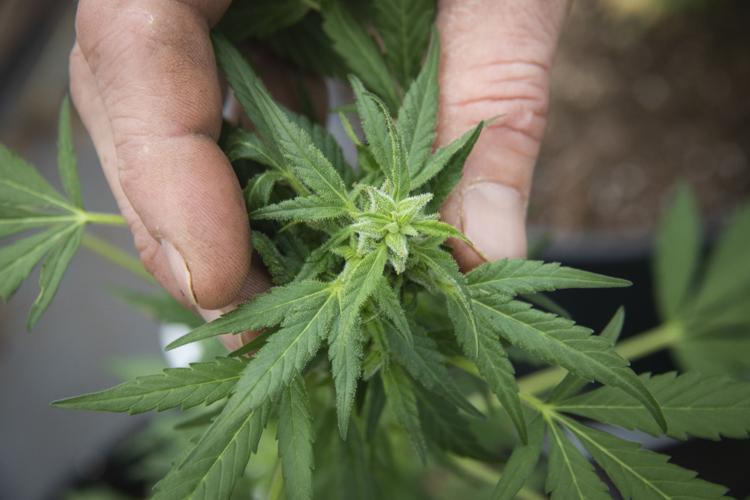
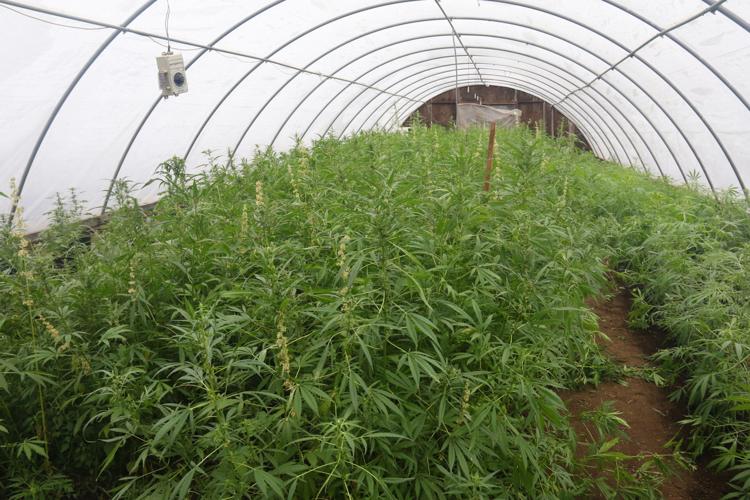
As hemp wraps up its first year as a plantable crop in Iowa, a few questions still remain for those growing it. The number one question – where exactly is it going to go?
In year one, Iowa received 81 license applications to grow hemp, and Iowa Department of Agriculture Hemp Administrator Robin Pruisner said they are currently gathering information from their growers to see what to expect next year. A large part of the outcome will likely be based on whether producers were able to be profitable.
“When I talk to growers, probably the most common answer I get back from them is ‘well, we’ll see if I make money or lose money on this year’s crop,’” Pruisner said.
Shane Mairet, an industrial hemp instructor at Muscatine Community College in Muscatine, Iowa, said the lack of infrastructure for the hemp product is one of the most difficult parts of the industry right now.
People are also reading…
“Technically, it’s not legal to process CBD oil or process anything right now in the state,” he said. “It has to be taken out of the state, and if we want this to be a viable crop for Iowa, we’ve got to have the ability to process it here at home.”
Hemp producers were limited to 40 acres of hemp with the license, and Pruisner said she was unaware of any legislation that would change that in 2021. The acre limit, put in place by the Iowa legislature, was put in place to prevent entities that have previous experience with hemp from monopolizing the market in Iowa.
Pruisner said another challenge for the Iowa hemp industry is how large the 2019 hemp crop was in other states. She said the crop grew more than 500% last year over 2018’s crop, but demand didn’t follow suit.
“We had a glut, and we still have some of that on the market,” Pruisner said. “People are still sitting on hemp from 2019 that needs to be sold. There are some supply and demand issues that need to settle themselves out.”
Pruisner said hemp is a “highly intensive manual labor” crop, comparing a 40-acre hemp field to a 40-acre garden, as much of the weeding needs to be done by hand
There are also strict regulations on the THC (tetrahydrocannabinol) levels in hemp — the compound that is most associated with medical marijuana. A Des Moines Register story reported nearly 13% of Iowa hemp fields had to be fully or partially destroyed due to levels exceeding 0.3%
Staying under those levels is a challenge, Mairet said, because there is no way to do handheld testing throughout the season. Any tests that are done have to be sent to a lab, and it may take a few days for results to return. He said that is more than enough time for the plant to change.
Mairet also said they don’t have an exact idea on what causes rises in THC levels.
“The weather is a huge factor. Too much nitrogen can be a problem,” Mairet said. “There are some variables, but we don’t know what the threshold is.”
Mairet is heading a class at Muscatine Community College focused on the growing and processing of hemp. The class grew and harvested a hemp crop over the fall semester, and in the spring will focus on processing.
There were some delays for Mairet’s class as COVID-19 and licensing took a little bit of time, but after the first semester, he said the crop his class grew looked very good. The class experimented with different row spacing and irrigation techniques, and he said Iowa’s climate is a good fit for the crop.
“Iowa has a great climate for it,” Mairet said. “Hemp can really be grown anywhere, but Iowa is just about perfect for it. It doesn’t hurt to have our amazing soil. As long as it doesn’t get too wet, especially in areas that don’t have the best soil, it’s a crop that can take a lot of abuse.”
However, with the infrastructure challenges, Pruisner urged producers to make sure they have a plan in place if they opt to try hemp next season.
“You shouldn’t plant this crop unless you have a contract to sell it,” Pruisner said. “In Iowa, we are spoiled when we grow corn. After you grow it, you can decide if you want to sell it to an elevator, a feed mill or an ethanol plant. With hemp, you have to know what you are growing for and what your purchaser wants up front.”


